Plan, diameter, foundation layers, sumps, liner or secondary barrier and available installation access.
MMO-coated titanium ribbon | Tank-bottom ICCP | Global project RFQs
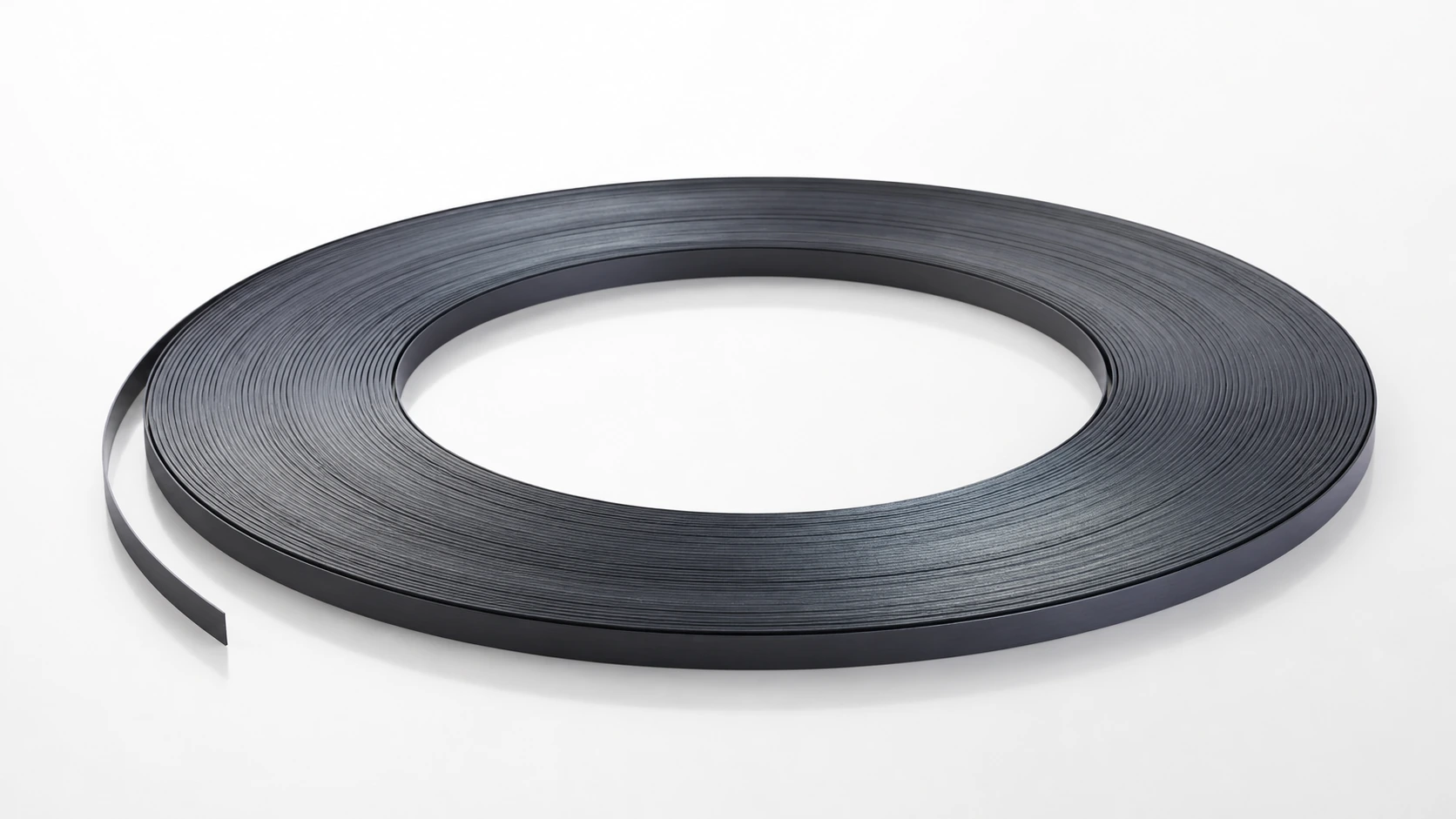
MMO Titanium Ribbon Anode
Specify the active anode from the job it must perform: distribute impressed current beneath the tank bottom for the required current, service period and installation conditions. Send the tank geometry, current demand, sand data and governing specification for an order-specific technical offer.
- MMO-Coated Titanium Ribbon
- Tank-Bottom ICCP
- Grid-Interface Review
- Order-Specific Documents
Product visuals are representative concept studies. Final titanium grade, dimensions, coating, current, design life, grid interface, connections and inspection scope are controlled by the confirmed quotation, approved drawings and order documents. Titanium conductor bars and other grid components are separate, optional supply items unless expressly included.
Total current, protection criterion, operating profile, design life and applicable allowances.
Resistivity, moisture, chlorides, temperature and the separation between grid and tank bottom.
The complete current path
The active ribbon must work inside a controlled electrical system.
The MMO-coated titanium ribbon is the catalytic current-discharge surface. Any feeder, conductor bar, field weld or connection detail is a separate system interface that must be defined by the project design and supply boundary.
Rectifier (+)
Feeder Cable
Sealed Power Feed
Optional Ti Grid Conductor
Controlled Intersections
MMO Ti Ribbon Anode
Sand / Electrolyte
Tank Bottom
A technical offer should separate substrate certification, coating and charge-capacity evidence, grid/weld controls and project-calculated system performance.
First-principles design basis
Calculate the current network before selecting coil quantities.
Ribbon width or roll length cannot establish grid spacing, current output or design life. The proposal must state the conditions and evidence behind each project value.
Current demand
Protected area × design current density
Coating condition, environment, shielding, leakage and design allowances shape the required system current.
Charge and life
Average current × operating time
Active area, coating charge-capacity evidence, duty cycle and safety factors support the order-specific life basis.
Distribution and voltage drop
Geometry + electrical interfaces + power feeds
Ribbon spacing, grid topology, attenuation, feed locations and electrolyte resistance control usable output. Any separate conductor component is checked only when it is inside the quoted scope.
Product first, system second
Define the active ribbon before engineering the tank-bottom grid.
The MMO-coated titanium ribbon is the active current-discharge product. Confirm its substrate, section, tolerances, coated area, reel identity and handling limits first; then derive spacing, feeds, optional companion conductors and connections from the approved tank-bottom ICCP design and supply boundary.
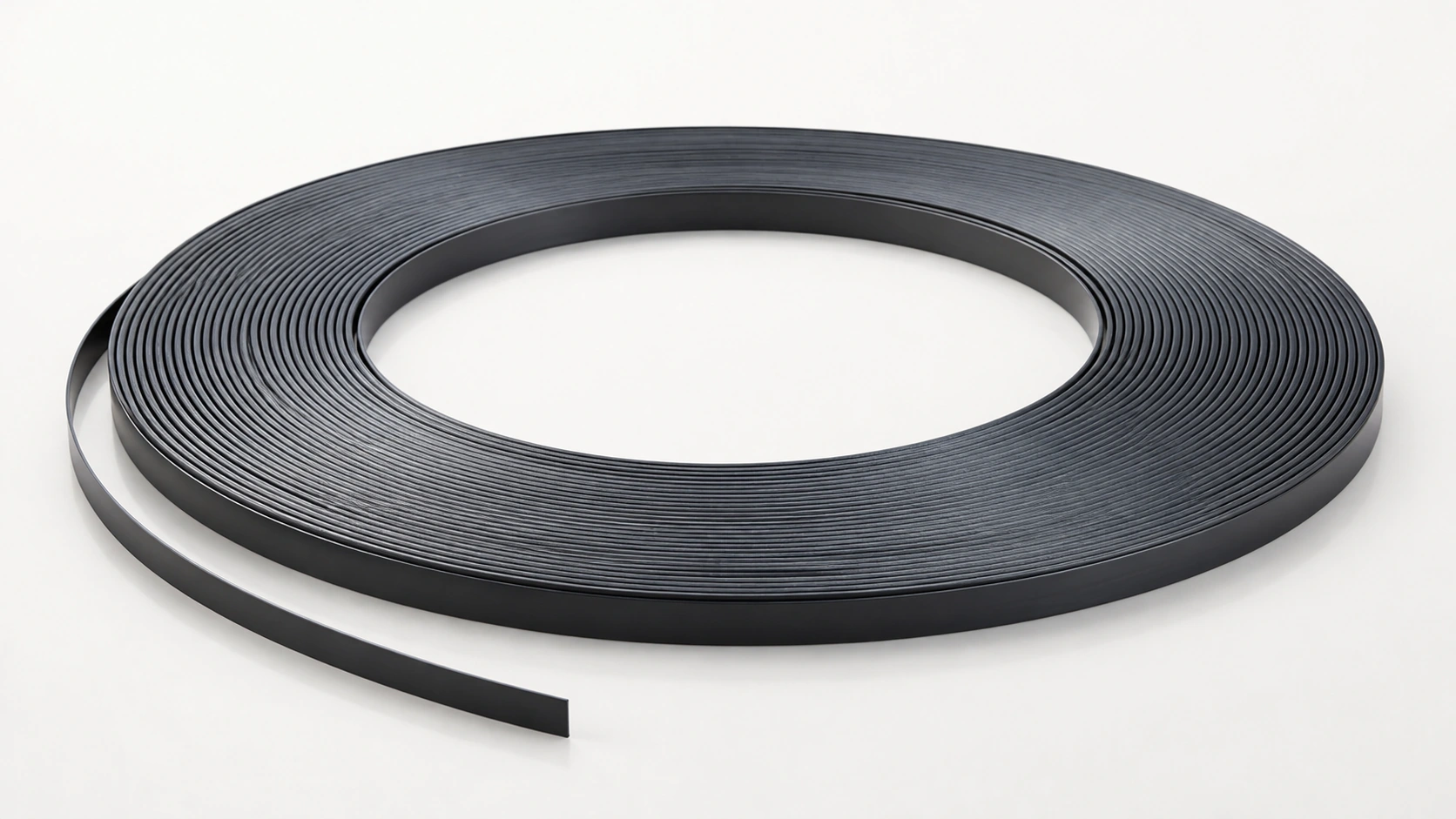
Ribbon product form
The active coated strip is the product.
Substrate grade, section and tolerances, active coated area, reel identity and handling limits are order-specific and must be stated in the quotation and manufacturing records.

Optional system context
A grid layout is engineered around the active ribbon.
Ribbon spacing, feed locations and any optional titanium conductor bars are project-designed system elements. This illustration does not define the ribbon product supply or promise a complete grid package.
Control the failure points
Ribbon quality and installation quality must join into one evidence chain.
The buried grid becomes inaccessible. Ribbon identification, coating handling, any field-joint procedure, power-feed sealing, continuity and isolation checks require agreed acceptance records before covering.
MMO ribbon
Substrate grade, section, active coated area, coil identity, handling limits and agreed coating qualification evidence.
Optional conductor network
If included, define uncoated titanium grade and section, calculated voltage drop, interconnections, redundancy and power-feed positions as a separate line item.
Welded intersections
Qualified resistance/spot-welding method, settings, sample checks, intersection count and field acceptance record.
Power feeds
Project-defined Cu/Ti transition, cable, environmental seal, strain relief, identification and connection inspection.
Pre-cover checks
Grid continuity, isolation from tank steel, power-feed resistance, reference-electrode checks and as-built layout.
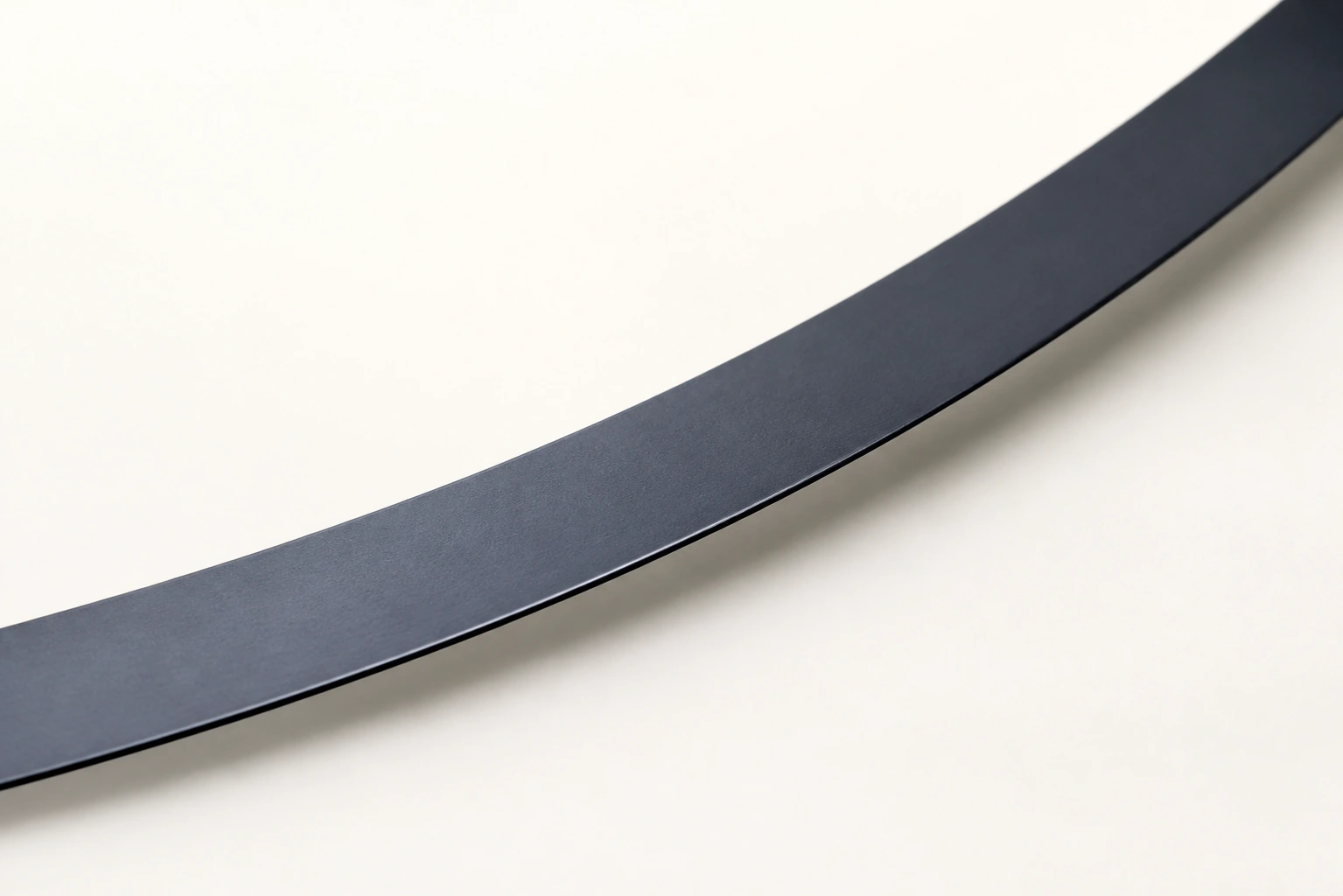
Application fit
Use solid ribbon where construction access supports a field-assembled grid.
The strongest verified application match is the external underside of a new above-ground storage-tank bottom, or a suitable double-bottom replacement project, with a designed sand/electrolyte layer and controlled installation access.
Explore storage-tank cathodic protection materials →
- New above-ground storage-tank bottoms
- Selected double-bottom retrofit projects
- Distributed grid in controlled sand cushion
- Owner/EPC drawing-defined tank systems
- Separate review for concrete mesh systems
- Separate review for pipeline continuous groundbeds
- Not a deep-well tubular-anode product
- Not a universal marine-ribbon configuration
Standards by scope
Use each reference only for the layer it controls.
No single public standard certifies the titanium substrate, MMO coating, field-welded grid and complete tank CP system together.
| Reference | What it controls | Correct application |
|---|---|---|
| ASTM B265-25 | Titanium and titanium-alloy strip, sheet and plate. | Substrate/product-form reference when the ordered grade is certified. It does not cover MMO coating, grid output, welds or life. |
| ISO 19097-2:2018 | Accelerated life testing of MMO anodes for soils and natural waters. | Qualification method under declared conditions; not a universal field-life guarantee or routine finished-grid certificate. |
| API RP 651, 5th ed. | Cathodic protection practices for above-ground storage-tank bottoms. | Tank-system application and design reference; not a ribbon product specification. |
| AMPP/NACE SP0193, project-specified current edition | External CP of on-grade carbon-steel storage-tank bottoms. | Confirm the edition required by the owner or project specification. It is a tank-bottom CP application reference, not MMO material or coating certification. |
| BS EN 16299:2013 | External CP of above-ground storage-tank bases in contact with soil or foundations. | System design, commissioning, operation and maintenance; not a universal product rating. |
The quotation should identify the required standard edition, substrate grade, test method, design criteria, field-weld scope, acceptance criteria and evidence. Complete-system performance depends on project design, installation, commissioning and operation.
Order-specific technical schedule
Define the anode and its interfaces before any value becomes contractual.
This guide does not substitute third-party catalogue values for CathPro product data. Final values appear in the accepted quotation, approved drawings/BOM and project ITP.
| Specification field | Information to define | Confirmation document |
|---|---|---|
| Application and geometry | Tank plan, diameter, protected area, new/retrofit status, bottom, foundation, liner, sumps and grid elevation. | RFQ, approved design basis and layout |
| MMO ribbon | Solid ribbon product form, titanium grade/standard, width, thickness, length, tolerances, active coated area and coil identification. | MTC, approved datasheet and BOM |
| Coating and duty | Application-specific coating control, required current, proposed surface/linear output, cumulative-charge and life basis. | Accepted technical proposal and agreed qualification record |
| Optional grid conductor | If included: titanium grade, section, length, resistance/voltage-drop basis, layout, interconnections and permitted feed duty. Otherwise state “by others”. | Supply-boundary schedule, calculation and material certificate |
| Grid interfaces | Intersection count, joining procedure, equipment/settings, sample tests, field inspection and continuity acceptance where included. | Method statement, ITP and installation record |
| Power feeds and cable | Number/location, Cu/Ti transition, conductor and insulation, free length, sealing, strain relief and test requirements. | Approved detail, cable schedule and inspection record |
| Monitoring and documents | Reference electrodes/test access, pre-cover checks, as-built record, MTC, CoC, ITP and third-party points. | Document register and inspection release |
Project evidence package
Agree the evidence before manufacture and installation.
Records are included only when confirmed in the quotation and project document register.
Design definition
Approved design basis, grid layout, calculations, BOM and power-feed schedule as ordered.
Material traceability
Titanium grade, product form, heat/lot linkage, coil identification and material certificates as ordered.
Coating evidence
Controlled-process, batch and agreed type-test or qualification-coupon evidence.
Grid installation QA
Weld procedure, sample checks, continuity, isolation, feed resistance and as-built records.
Release documents
ITP, inspection report, Certificate of Conformity and third-party records as ordered.
Packing and handling
Coil identification, packing list, net/gross mass, storage and coating-protection guidance.
Download the MMO Titanium Ribbon Anode Data Sheet
Use the PDF to define the anode duty, grid-interface boundary, required evidence and the inputs for a technically complete RFQ. No form is required.
Technical questions
Turn a coil-price request into a quoteable anode requirement.
These answers separate the MMO ribbon product from the optional conductor network, field installation and complete-system performance.
Is a titanium conductor bar part of the MMO titanium ribbon anode?
No. The MMO-coated titanium ribbon is the catalytic current-discharge anode. An uncoated titanium conductor bar may distribute positive current across a project grid, but it is a separate companion component and is not included unless the quotation expressly lists it.
How is ribbon spacing selected?
Spacing is calculated from tank geometry, current demand, ribbon-output basis, sand or electrolyte properties, separation, obstructions and required current distribution. It is not selected from ribbon dimensions alone.
How is design life determined?
Design life depends on cumulative charge, coating charge-capacity evidence, active area, current density, electrolyte, duty cycle and installation integrity. The project value requires a declared calculation and qualification basis.
Does ASTM B265 certify the complete grid?
No. ASTM B265 covers titanium strip, sheet and plate product requirements. MMO coating, grid design, welds, power feeds, output and life require separate order requirements and evidence.
Can this grid be installed under any existing tank?
Not automatically. A conventional field-assembled grid normally requires access during new-bottom or double-bottom construction. Retrofit feasibility depends on the tank construction and should be reviewed from current drawings.
Is MMO titanium ribbon the same as zinc ribbon anode?
No. MMO-coated titanium ribbon is an impressed-current anode used with an external DC power source. Zinc ribbon is a galvanic or mitigation product in different designs; the two are not interchangeable.
What information is needed for quotation?
Provide the tank plan and diameter, new or retrofit status, foundation and sand data, required current, design life, governing specification, supply boundary, quantity, destination and required inspection documents.
Technical RFQ
Send the inputs that control the anode duty and quotation.
Have a tank plan, BOQ or owner specification? Upload it. Still in design? Send the available geometry, current and sand data; we will identify the missing product and interface inputs.
- We check application fit and RFQ completeness.
- We identify missing anode-duty, grid-interface or supply-boundary data.
- We confirm the ribbon, evidence and document scope before quotation.